Lapis
A new residential building that sets an example for ecological construction is to be built in the Ausserholligen district in the west of Bern. The Freiburgstrasse 139E development competition attracted considerable interest from planners, with an impressive 69 project submissions competing for the top spots. In this context, we are particularly pleased to have achieved third place in the competition as part of a team with Stiller Projects.
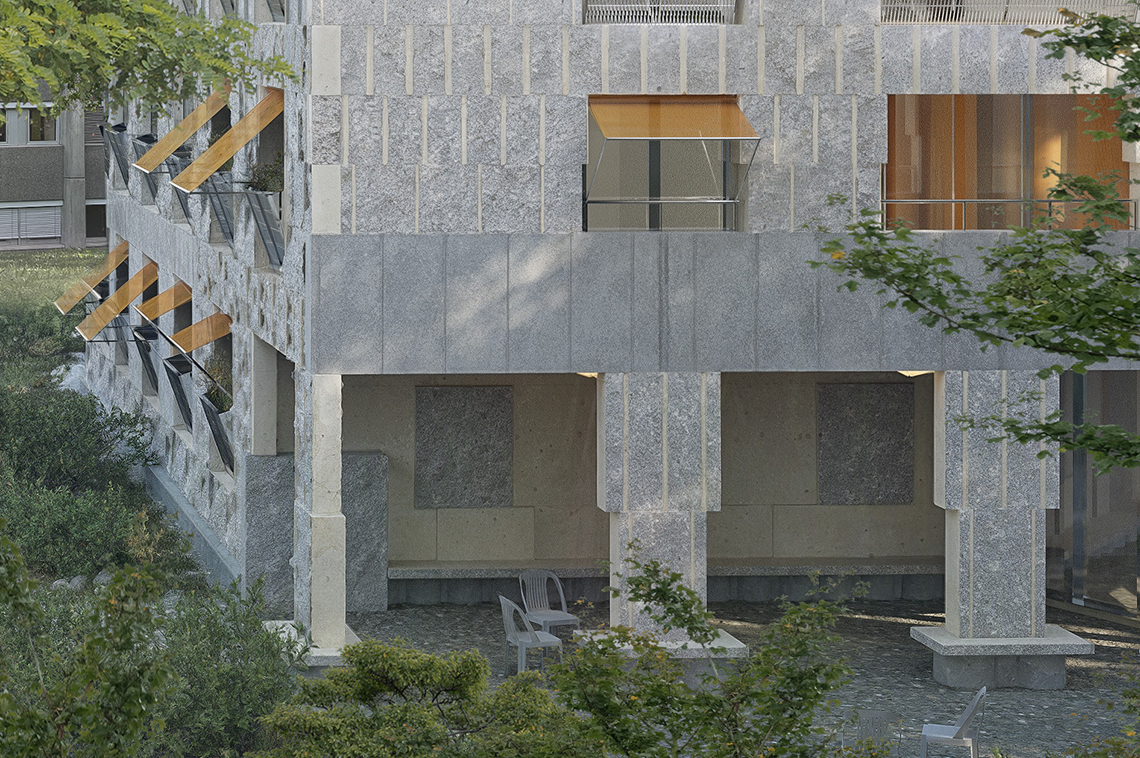
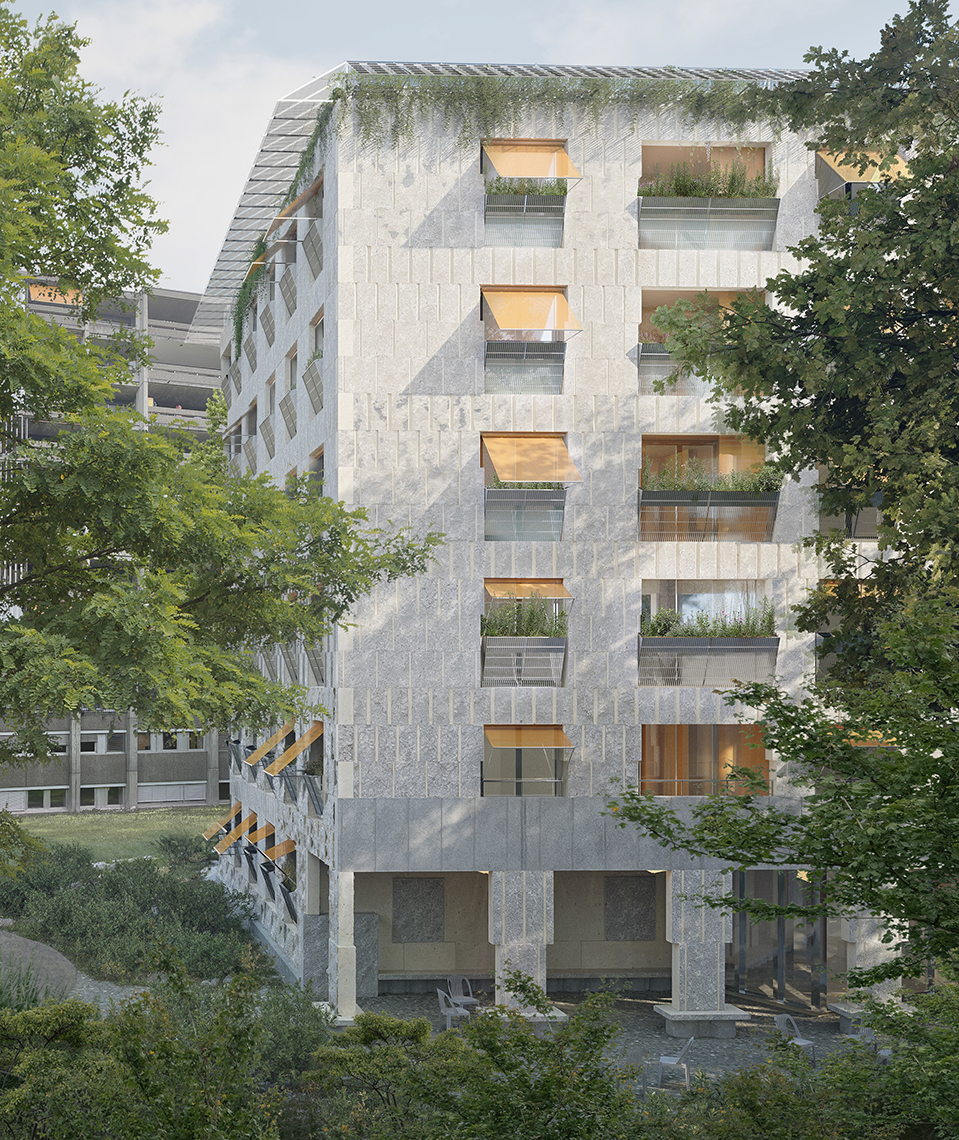
The Lapis design comprises two interlocking rectangular buildings. The wide variety of apartment types on each floor underlines the desired high degree of social diversity. “The designers of the Lapis project have succeeded in developing attractive floor plans based on the structural logic of stone and wood, giving the building a unique expression and lending the location a positive identity.”
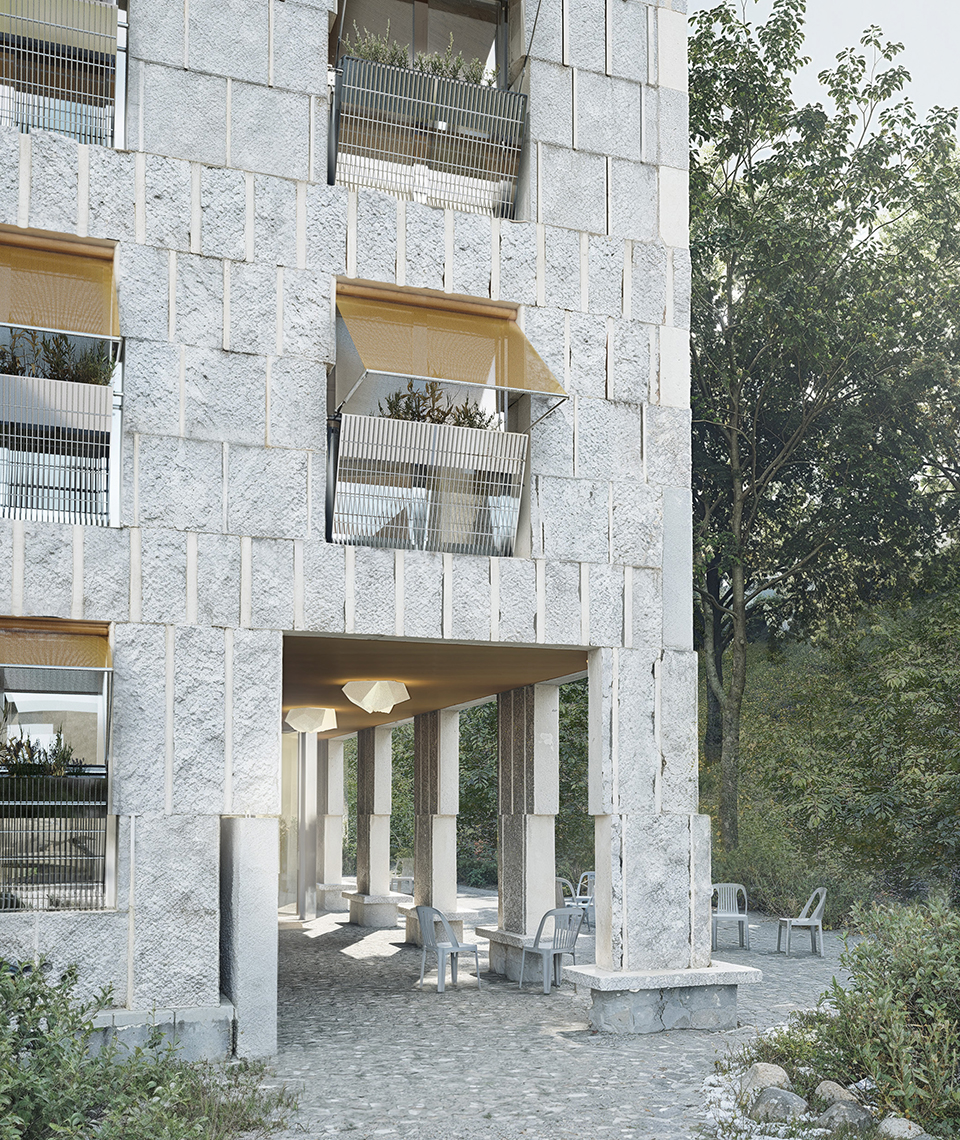
LÜCHINGER MEYER PARTNER’s structural concept for the building is primarily based on a strict grid pattern. This allows for appropriate flexibility of use and forms the basis for a system construction with the highest possible degree of standardisation. The natural stone façade also performs the static function of transferring vertical and horizontal loads. If necessary, the bracing walls can be locally prestressed with cables, ensuring that the stone mainly experiences compression – a type of load that optimises the typical material properties of natural stone.
The floor slabs above the ground floor are constructed using sustainable wooden box elements from the ceiling. These elements span between a central main girder and the load-bearing façade walls. The resulting span of less than 5 metres reduces both the construction height and the amount of material used. Additionally, the beams are integrated into the ceiling system, which further reduces the overall height of the ceiling-beam system. The interior supports, made of natural stone and reinforced with four rods, efficiently transfer
“The authors have thoroughly researched the properties of natural stone and convincingly demonstrate its fundamental sustainability as a construction material — it is resource-efficient, long-lasting and aesthetically pleasing,” said the jury.
All project submissions will be on display as part of a public exhibition at the Beer House from 30 January to 7 February 2026.
Visualisations: Nora Walter