Vilnius Congress Centre – Building as Landscape
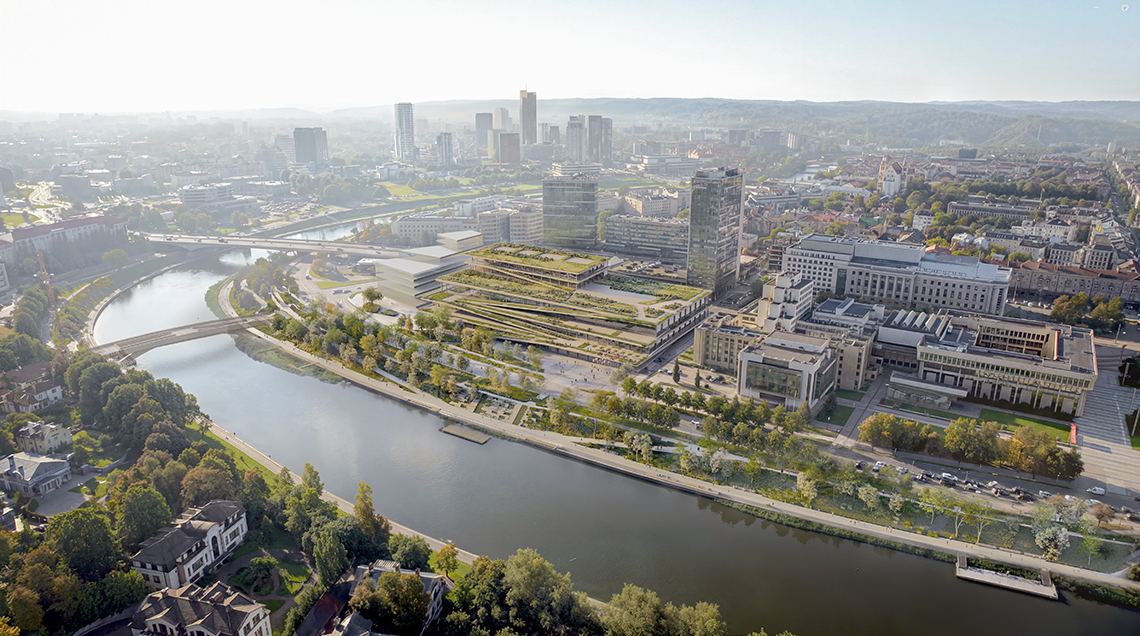
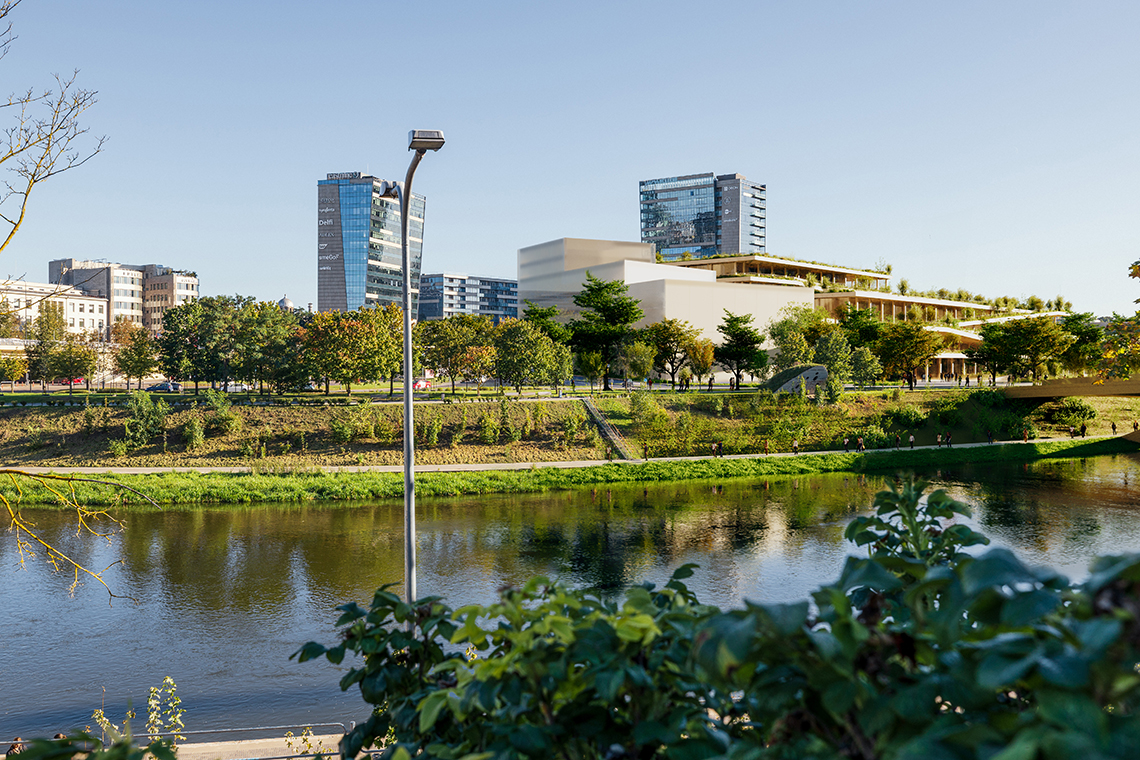
Vilnius, the capital of Lithuania, aims to become a leading center for international conferences and events in the Central and Eastern European region. A new convention center on the banks of the Neris River is intended to lay an important foundation for this goal. Working together with the Polish architectural studio WXCA, our structural engineering teams from Madrid and Zurich achieved a remarkable 10th place in the international competition.
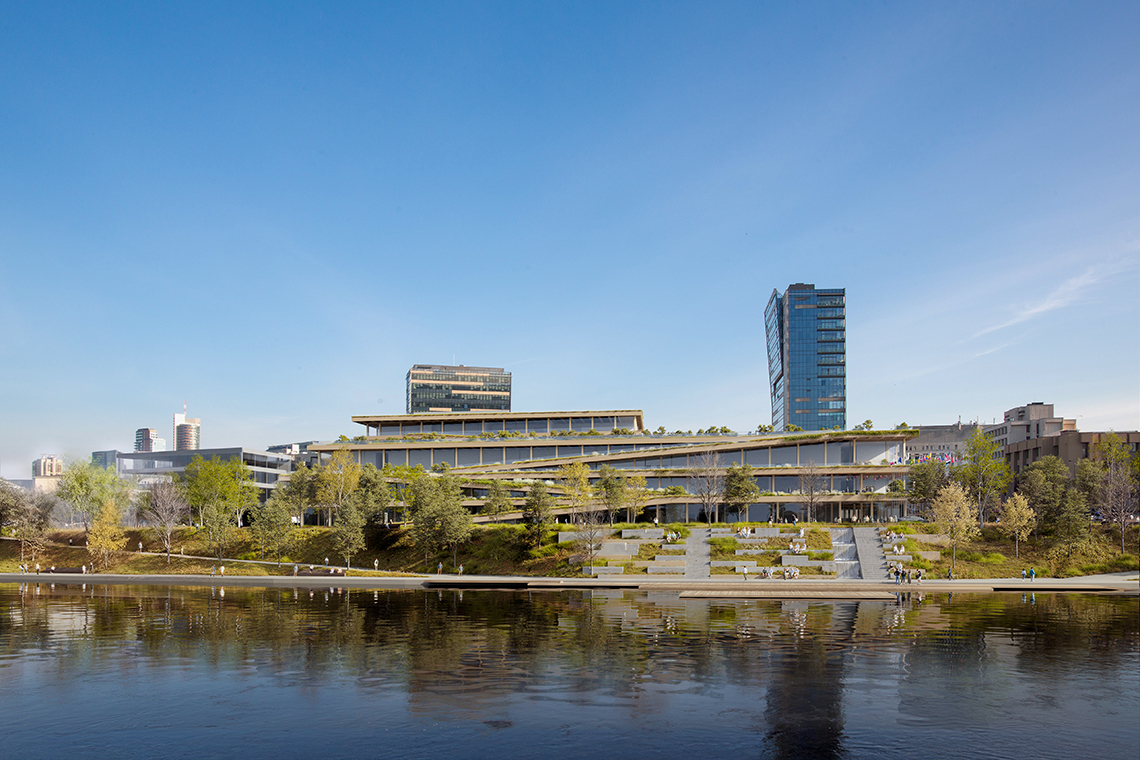
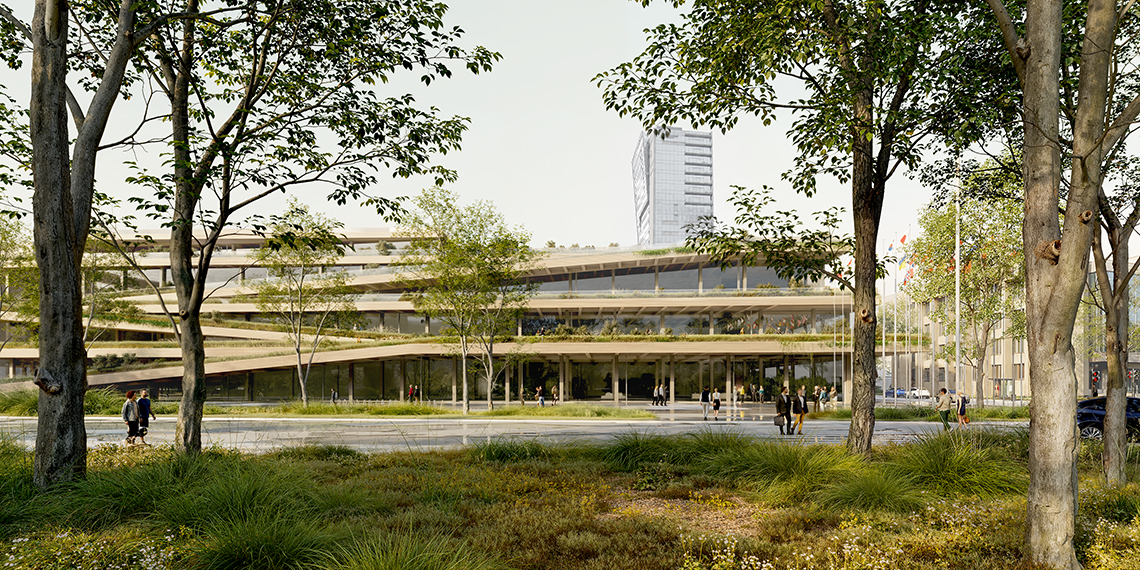
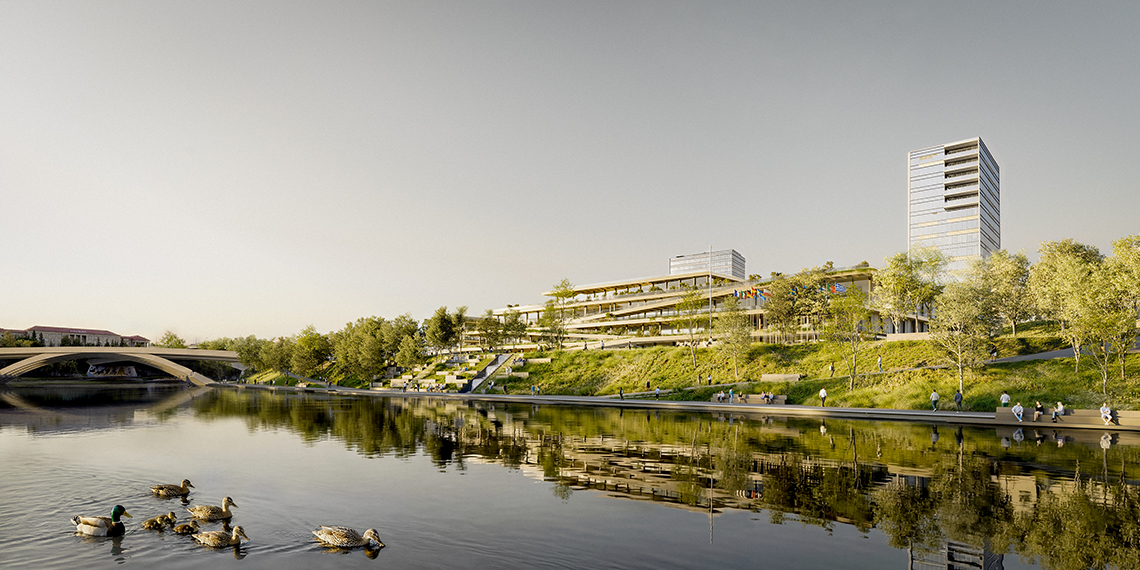
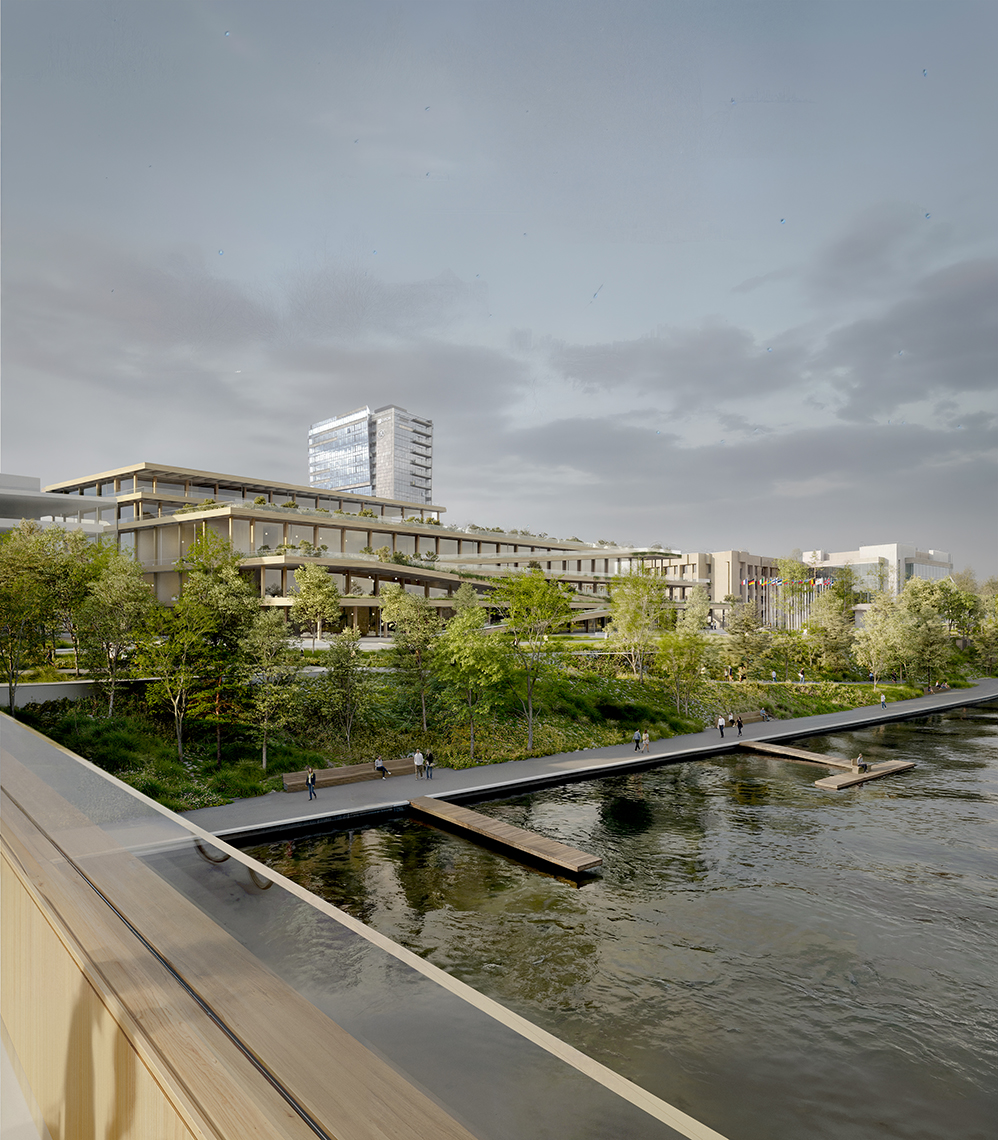
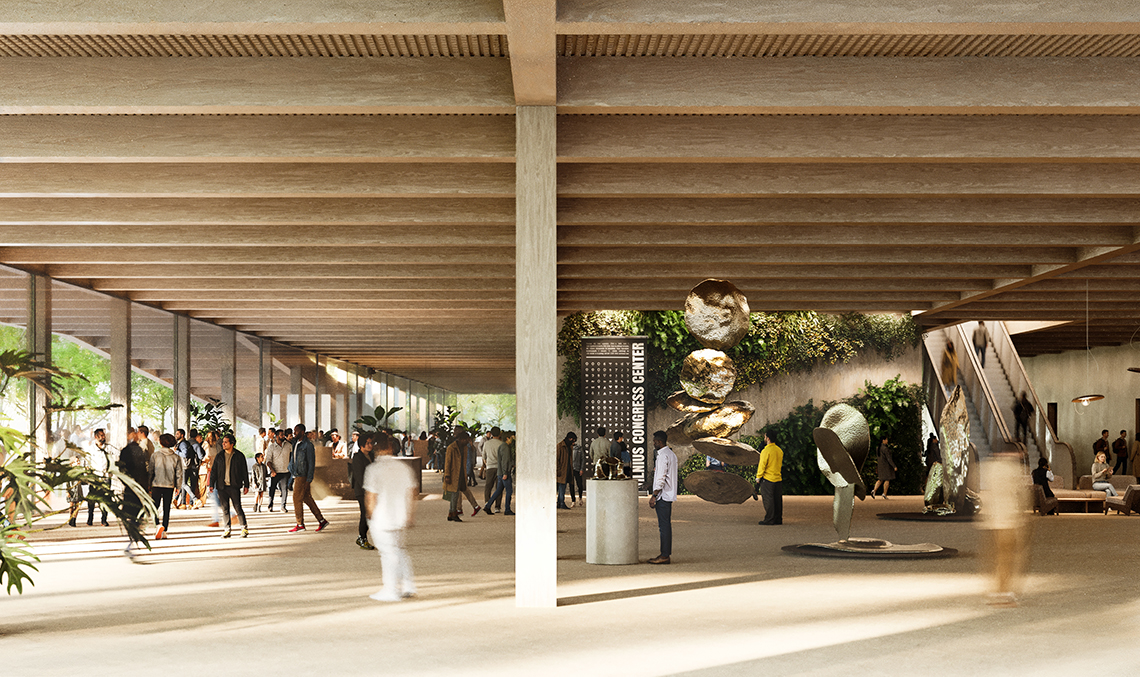
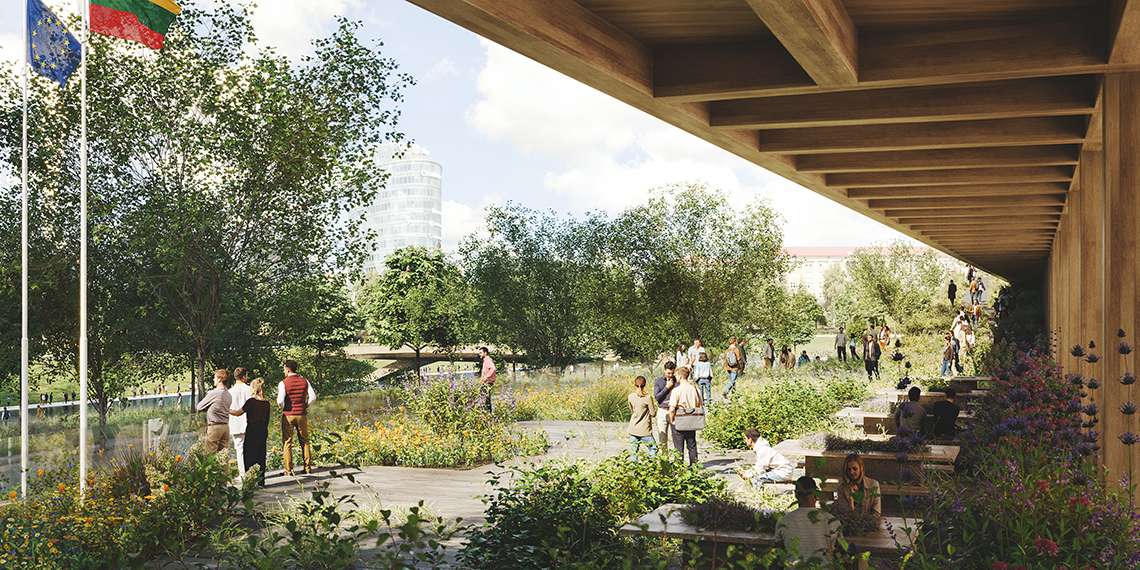
“The building forms a walkable topography composed of terraces, ramps, gardens, and accessible roof landscapes. Rather than appearing as a closed architectural object, the Congress Centre becomes an extension of the riverside promenade and the city’s public realm. This architectural landscape invites residents, visitors, and congress participants to explore the site, creating a dynamic platform for everyday urban life and international events.”
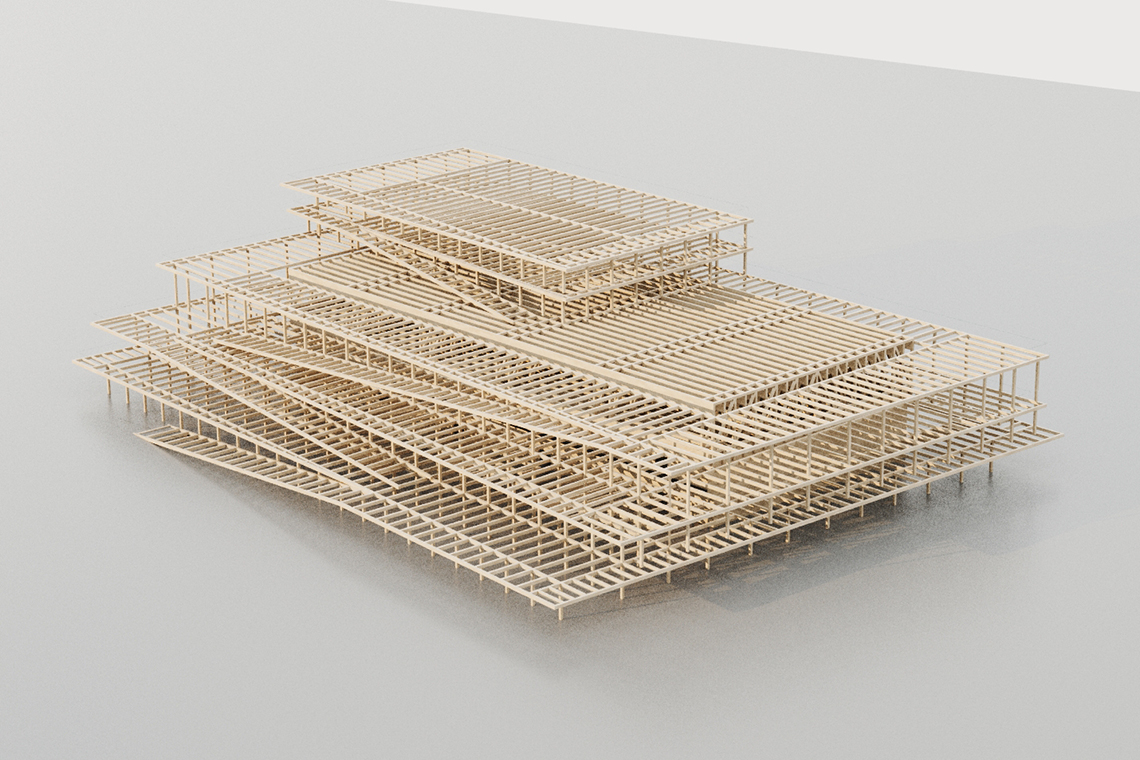
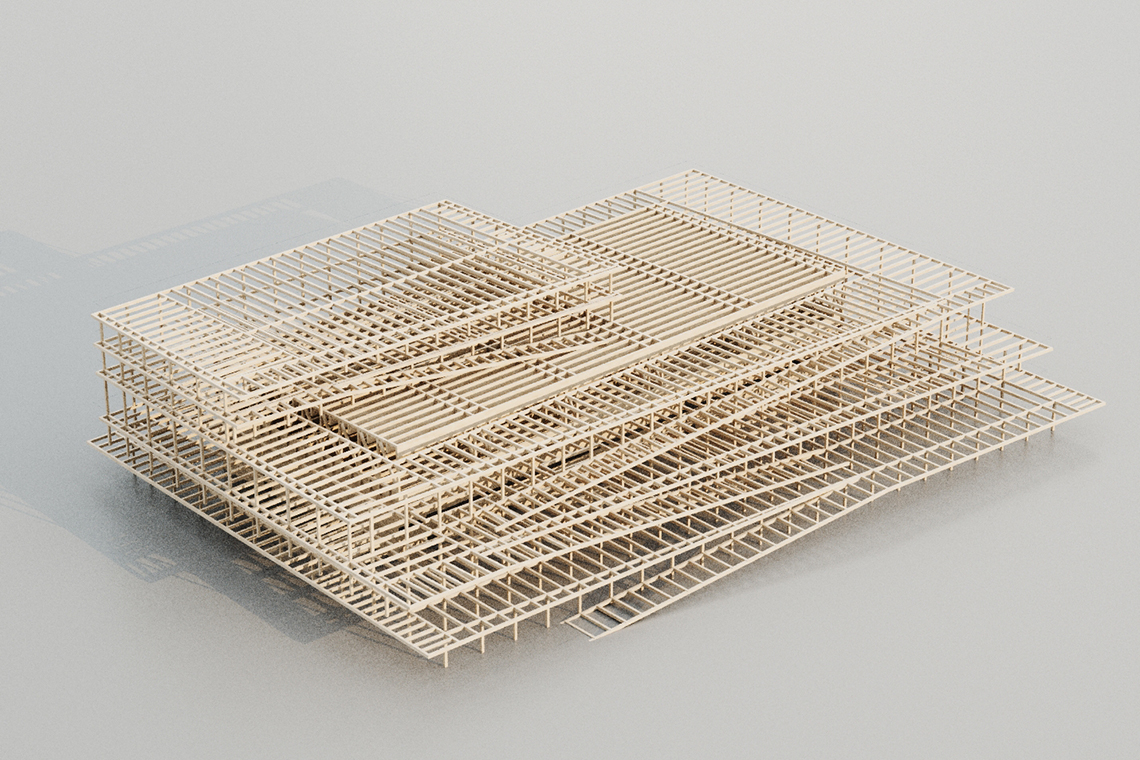
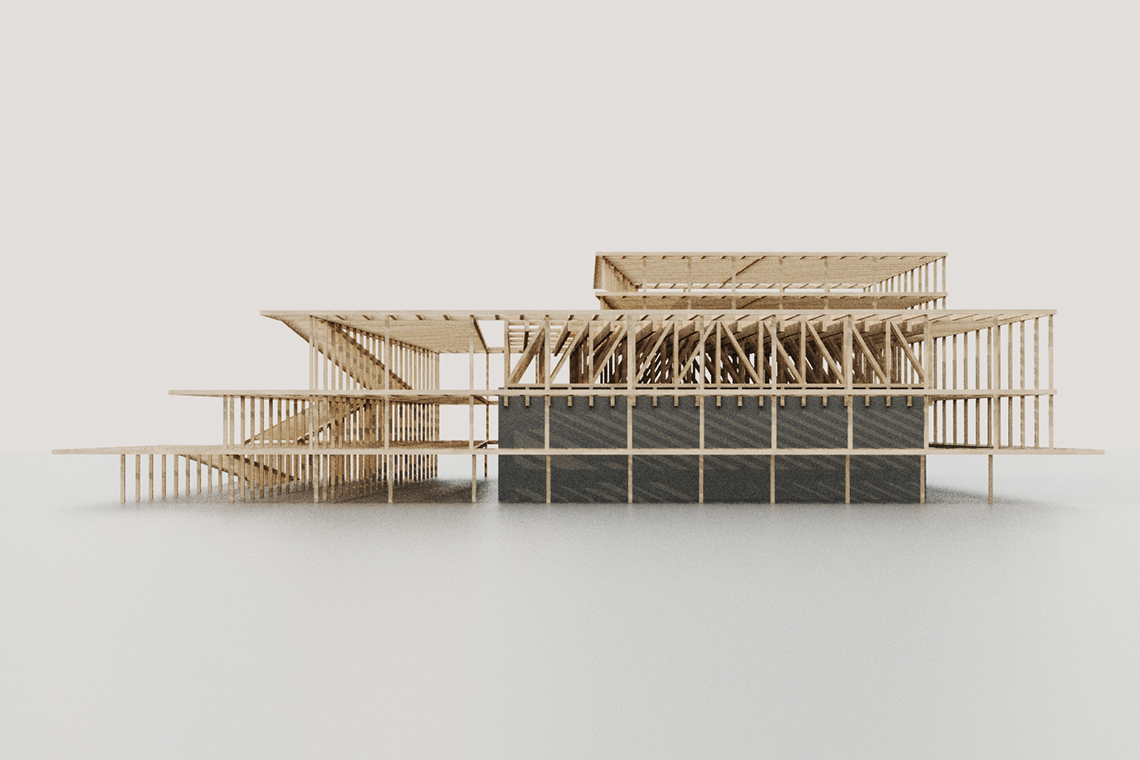
The structural engineers at LÜCHINGER MEYER PARTNER propose a hybrid structural system. From both a structural and functional perspective, the building is divided into two primary, synergistic components: The heart of the building, which houses the conference halls and the vertical circulation, consists mainly of low-emission reinforced concrete combined with steel and timber. This “heavy core” provides the building with stability against horizontal loads such as wind and earthquakes.
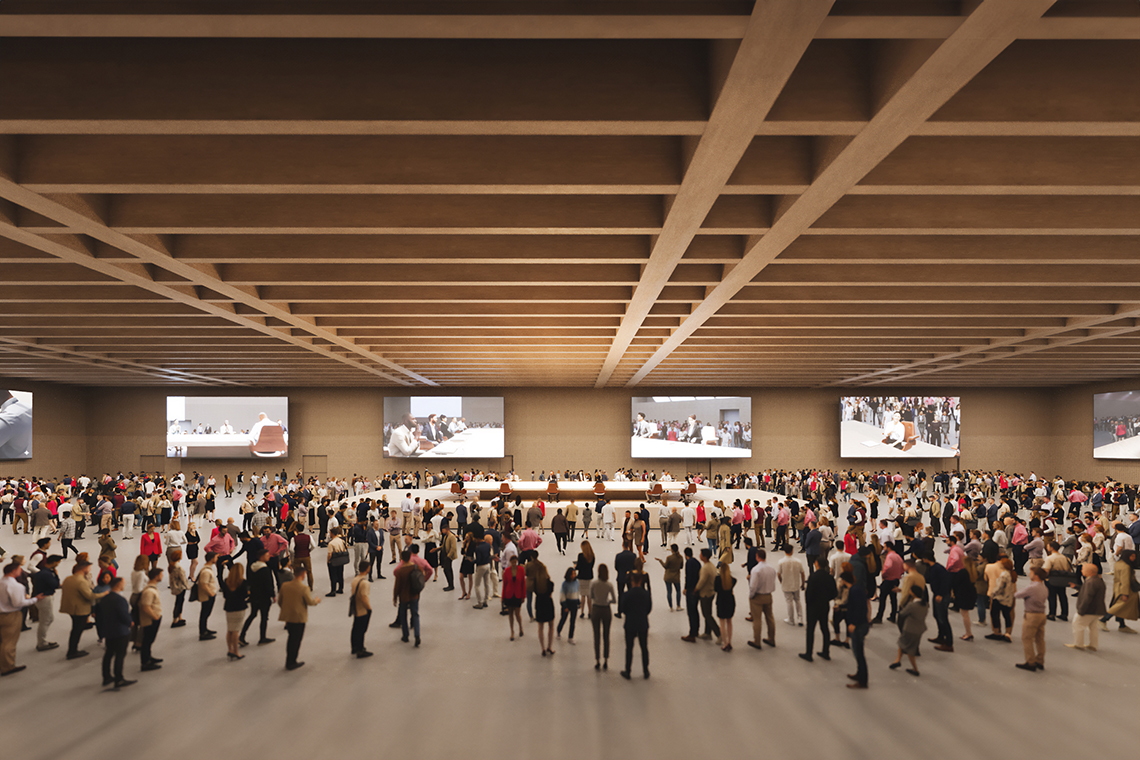
To create the spacious, column-free convention halls, long-span steel truss systems are arranged along the interior transverse axes every 20 m. The spans of approximately 44 m are efficiently designed by utilizing the hall’s total height of approximately 10 m. Wood-concrete composite floors span between the trusses.
The core is surrounded and crowned by a sustainable, prefabricated, and relatively lightweight modular skeleton system consisting mainly of timber, partially supplemented with concrete components. The main beams extend longitudinally along the building, while the floor slabs—realized as timber-concrete composite modules—transfer the loads uniaxially. The connection between the timber ribs and the concrete layer is achieved through an innovative mechanical system that allows easy separation and dismantling of the different materials in accordance with Design for Disassembly (DfD) principles. The lateral connections between the modules are also mechanically designed to activate a diaphragm (membrane) effect within the floor plane, ensuring structural continuity with the horizontal bracing elements while still allowing straightforward dismantling and potential reuse of the modules.
Visualisations: WXCA